
Leistungen
Regulatory Obligations as Protection Assets — not as a Burden

NIS-2, CRA, Machinery Regulation, product liability — new frameworks, unclear scope, underestimated exposure. We turn regulatory uncertainty into demonstrable, audit-proof compliance — technically implementable and economically assessed.
Regulatory Compliance
The technology runs — but
-
Regulatory scope unclear: Am I actually subject to NIS-2 or CRA?
Implementation difficult: What exactly do I need to do — technically and organizationally?
Which regulatory requirements do my existing systems or prototypes already meet? Is “retrofitting” even possible?
Underestimated liability: What does non-compliance actually cost — fines, production shutdown, personal liability?
Supply chain exposure: Am I affected as a supplier through my customers’ requirements — even if I’m not directly subject to the regulation?
Value not recognized: Compliance as protection asset against real risks, not just bureaucracy.
The result: Uncertainty about whether and what applies. Uncertainty about how to implement it. Uncertainty about how costly it actually gets when it’s not done right.
Relevant frameworks*
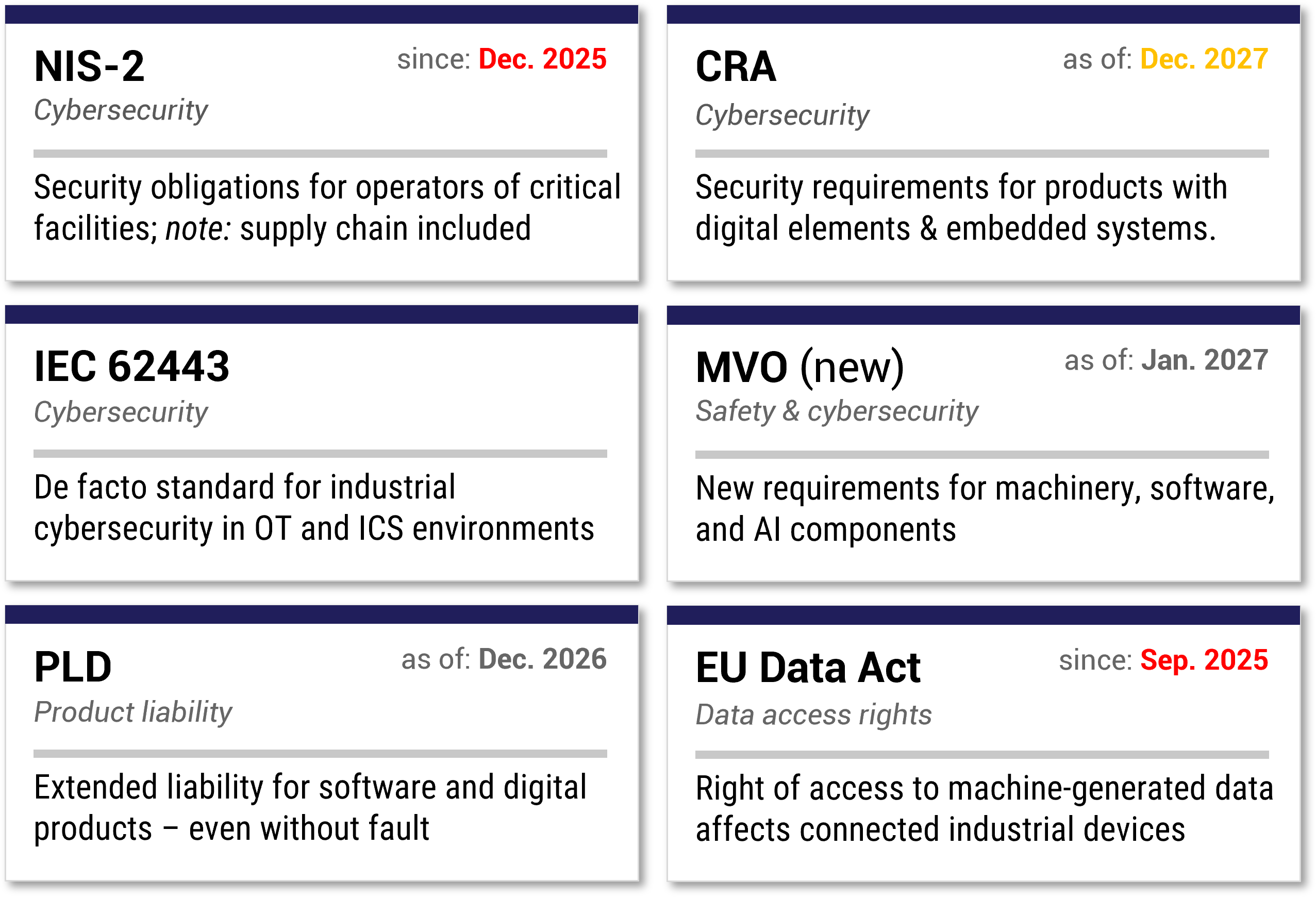
* Excerpt — additional relevant regulations may apply depending on industry and context.
Conformant and secure — Predictable compliance
-
Assessment, gap analysis, and risk evaluation: Which regulations apply? Where are the gaps? How high is the liability risk?
Action plan and prioritization: What needs to be done first? What is must-have, what is nice-to-have?
Compliance-by-design in development: Regulatory requirements are integrated into the architecture and processes from the very beginning — no costly retrofitting.
Recommendations (technical and organizational) along with concrete implementation within the system.
Documentation and audit preparation: Evidence, technical documentation, preparation for inspections.
When selling a company
-
Regulatory gaps, technical debt, and undocumented systems are the most common findings in buyer technical due diligence. Those who identify and remediate them before the buyer finds them protect their purchase price. Those who don’t end up negotiating against their own findings.
Beyond regulatory compliance, the assessment covers technical debt, engineering process maturity, and system lifecycle status — without requiring subsequent modernization. For M&A advisors with industrial clients, it’s available as a standalone Technical Exit Readiness assessment.
Our edge — Engineering meets Law
The combination of technical engineering and legal expertise makes the difference: We don’t just assess whether a system meets a requirement — we understand the regulatory frameworks as a matter of law, translate them into technical requirements, and implement them in development — with economic viability in mind.
Ready for clarity?
Request your free initial assessment now!
30–60 min. call • Report within 2 weeks • Free of charge • Confidential • No strings attached